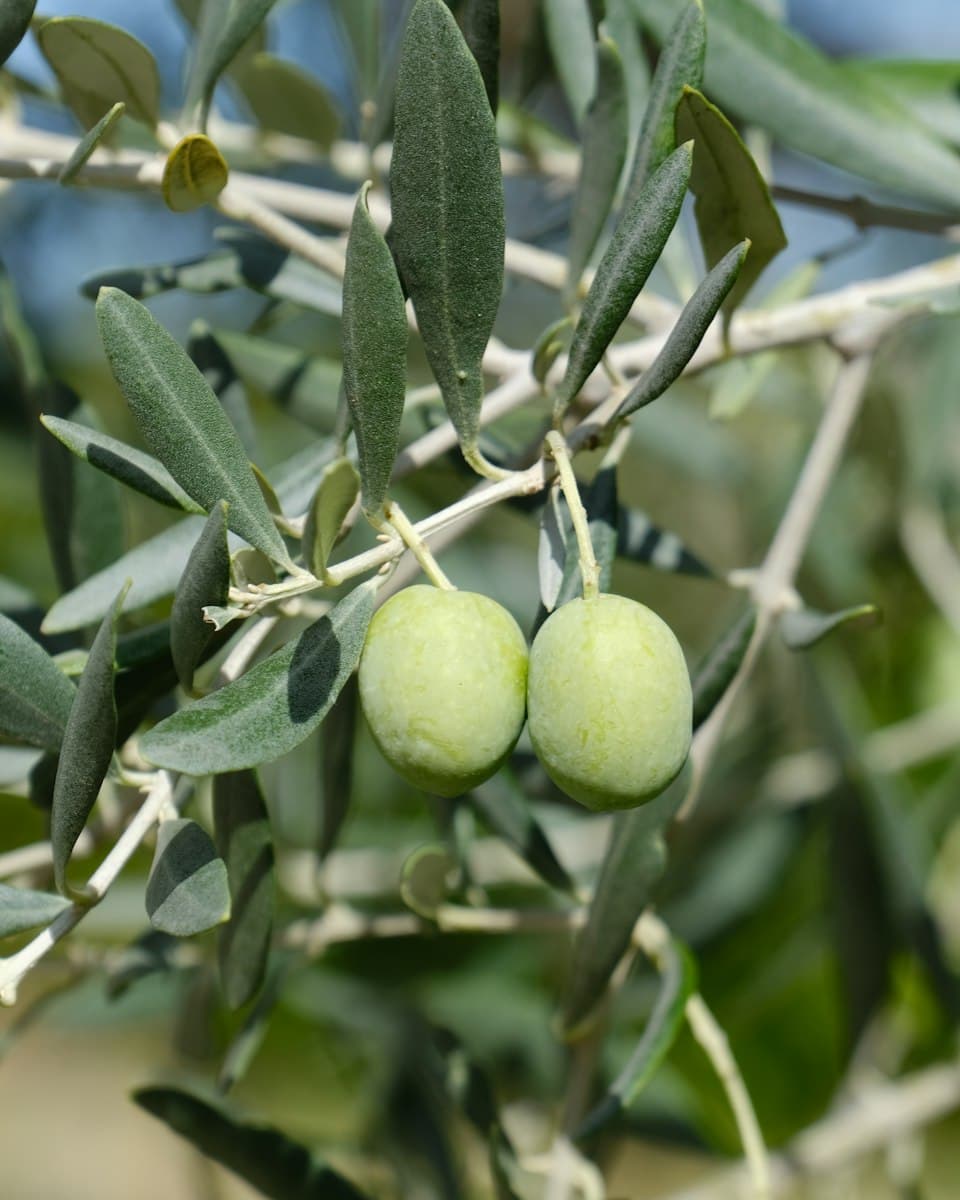
Why it is the base of so much of our line
Olive oil is unusually high in oleic acid and squalene - two molecules also produced by human sebaceous glands. That biochemical similarity is the reason olive-oil soap leaves skin feeling 'fed' rather than stripped: it cleans by saponified surfactant action, but its glycerin and unsaponified residue mimic the skin's own surface lipids. In our catalogue this shows up most clearly in olive-based soaps and the body oils that use olive as their carrier.
How it has been used for centuries
Levantine soap-makers have boiled olive oil with lye in open vats since the Mamluk era. The cold-process versions cure on wooden shelves for nine to twelve months, drying gradually until the bar is dense enough to last a season. Tripoli and Aleppo are the two best-known centres of the craft; modern Khan Al Saboun production follows the same slow-cure tradition rather than industrial superheated saponification.