0

Shopping Cart

Ingredient

Frankincense

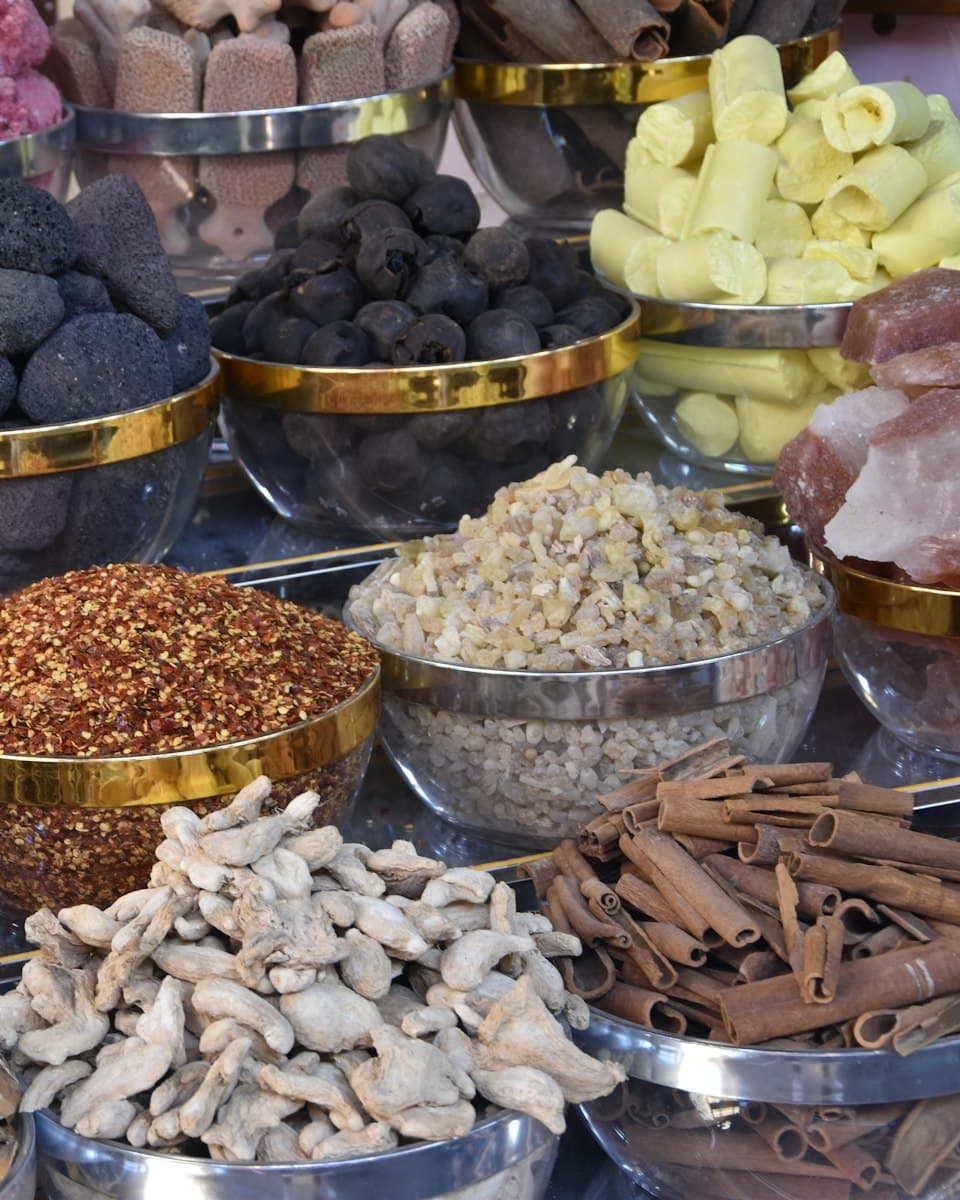
Hardened resin tapped from small thorny trees that grow in the dry highlands of Oman, Yemen, Somalia and Eritrea. Distilled to a pale-citrusy oil and dissolved into cosmetic creams as an anti-inflammatory and skin-conditioning agent.

Boswellia carterii / Boswellia sacra

At a glance

Part used
Resin (hardened sap) tapped through shallow cuts in the bark
Origin
Dhofar (Oman), Hadramaut (Yemen), Somaliland, Eritrea
Process
Sun-dried tears, then steam-distilled to essential oil; some grades resin-extracted
pH
Not applicable (oil-soluble extract)

Frankincense

Boswellic acids and the calming claim

Frankincense resin contains boswellic acids - a family of triterpenoids studied for their anti-inflammatory activity. Most of the published research is on oral preparations of Boswellia serrata for joint inflammation, not on cosmetic topical use. In cosmetics, frankincense essential oil and resin extract are valued mainly for their skin-conditioning film-forming property and their warm-balsamic scent, not as a clinical anti-inflammatory.

Why we blend it with damascus rose

Frankincense oil is heavy and resinous; rose distillate is light and aqueous. Combined, they balance each other - the rose carries the water phase, frankincense dissolves in the oil phase, and the finished cleanser or scrub has a fuller-bodied feel than either alone. The pairing has been used in Levantine and Egyptian cosmetics for at least two millennia, partly for the scent and partly for this technical reason.

Featured in

How Khan Al Saboun uses frankincense

Questions

Questions about frankincense

  • Boswellia carterii or Boswellia sacra - which is in your products?
    We use Boswellia carterii, the species that grows in Somaliland, Eritrea and parts of Yemen, sourced through cosmetic-grade distillers. Boswellia sacra (Oman) is rarer and prized for incense rather than cosmetic distillation. Both species have similar boswellic-acid profiles; the cosmetic difference is minor.
  • Is frankincense safe during pregnancy?
    Cosmetic-concentration frankincense in finished cleansers, scrubs and serums is considered low-risk in pregnancy. Neat essential oil should be avoided in the first trimester as a general caution that applies to all essential oils. If you are pregnant, prefer our pre-formulated cleansers and serums over adding drops of pure oil yourself.
  • Will it leave my skin oily?
    In finished cosmetic concentrations (typically 0.5% to 2%), no. Frankincense in our formulations is dissolved into a balanced base - water-phase distillate or emulsion - and the residue is light, slightly silky, not oily. The vitamin-C serum is the lightest of the three; the scrub is mineral-based with frankincense as the scent and conditioning fraction.
  • Does the smell linger on skin?
    Yes, faintly, for an hour or two. Frankincense has a warm-balsamic note with a faint citrus top; it is one of the longer-lasting cosmetic ingredients in terms of scent persistence. If you prefer a clean-skin finish, rinse off the cleansers and scrubs thoroughly; the serum leaves the most lingering aroma because it stays on the skin.