سلة التسوّق

المجلة

Rosemary oil for hair: what it does - and how to use it properly

The Mediterranean's oldest hair ritual is having a moment. What the research actually says, what's in a bottle of pure rosemary leaf oil, and how to use it without irritating your scalp.

Rosemary oil for hair: what it does - and how to use it properly

Rosemary oil for hair: what it does - and how to use it properly

Rosemary has gone from grandmother's remedy to the most talked-about ingredient in hair care, and the searches follow: rosemary oil, rosemary water, rosemary scalp treatments. Underneath the trend sits a plant the Mediterranean and the Levant have used on hair for as long as written records exist.

This guide keeps it practical: what rosemary oil can and cannot do, what is actually in Khan Al Saboun's version, how to apply a pure leaf oil safely, and how long to give it before judging results.

What rosemary oil actually does

Two things are well established: massaged into the scalp, rosemary oil stimulates circulation - you feel it as a mild, warm tingle - and its scent and antimicrobial character have made it a scalp-freshening ritual for centuries. On the bigger question, hair growth, we stay careful: small clinical studies comparing dilute rosemary oil with topical minoxidil have shown comparable scalp-coverage results over months of consistent use, which is encouraging - but the literature is small, and we make no medical claims. Rosemary oil is a scalp-care tradition with promising research behind it, not a treatment for hair loss.

What's in the bottle

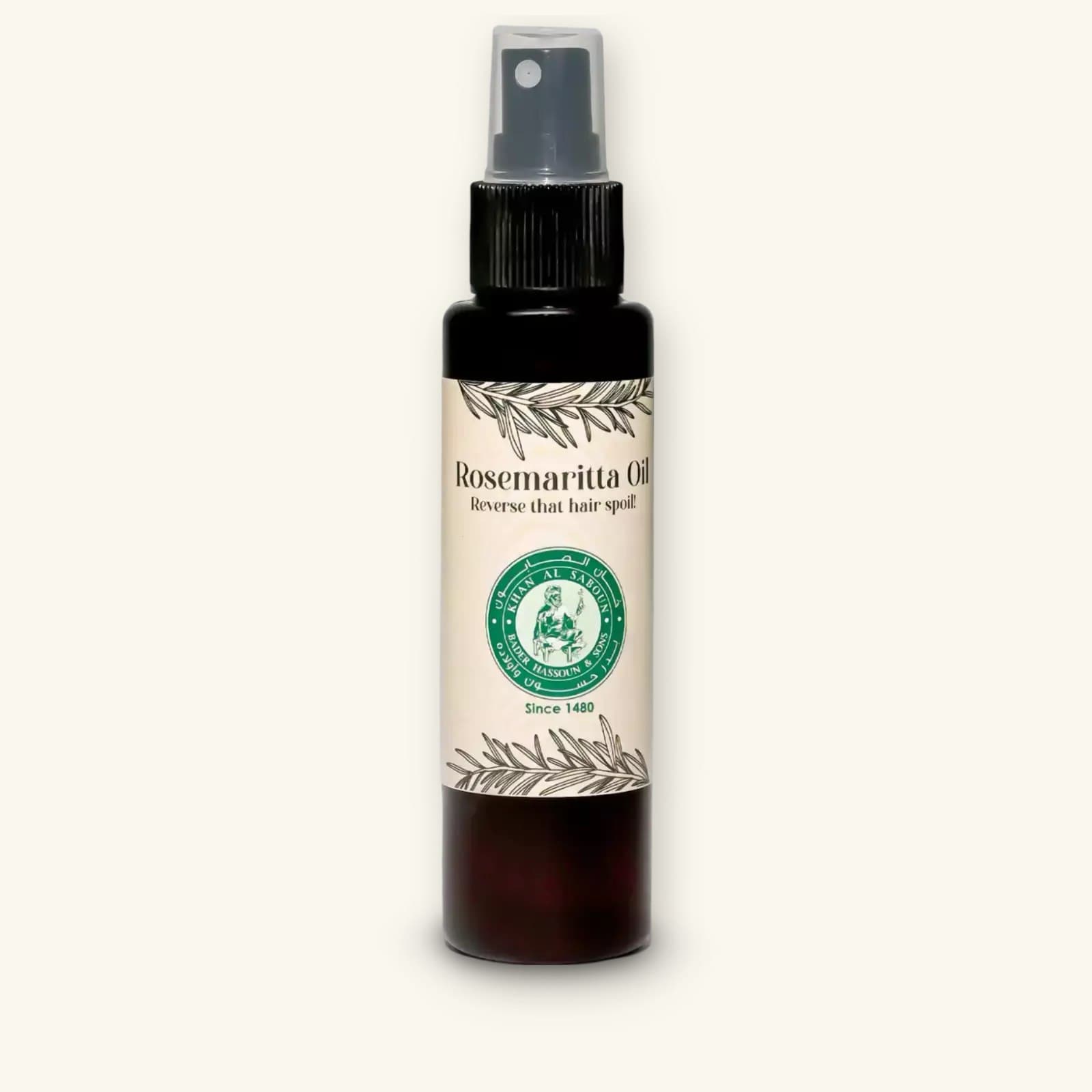
Khan Al Saboun's rosemary hair oil is exactly one ingredient: pure Rosmarinus officinalis leaf oil, undiluted. No carrier, no added fragrance, no preservatives - the INCI list is a single line. That purity cuts both ways: a little goes a long way, and it deserves the same respect as any potent essential oil. If you are used to pre-diluted "rosemary oils" that are mostly carrier oil, expect this one to be far more concentrated.

How to use it

The maker's ritual: massage the oil into the scalp with your fingertips, leave it to work for an hour or two, then wash out with your usual shampoo. Because this is a pure leaf oil, start small - a few drops, sectioned across the scalp - and patch-test first: a drop behind the ear, a few hours' wait, and proceed only if the skin stays calm. A brief warm tingling is normal and fades; persistent itching or redness means wash it off and dilute next time. Sensitive scalps can blend a few drops into a spoonful of a neutral carrier - sweet almond or olive oil both work - for a gentler version of the same ritual.

Oil, rinse or rosemary water?

Rosemary reaches hair in three forms. Rosemary water - a leaf infusion or hydrosol spray - is the lightest: a leave-in refresher with the mildest effect. Rinses sit in the middle. The oil is the most concentrated form and the one used in the studies that made rosemary famous: it stays on the scalp long enough to matter, and it doubles as a pre-wash conditioning treatment for the lengths. If you adopt only one, the oil ritual once or twice a week is the version with both tradition and research behind it.

What to expect, and when

Consistency beats intensity. In the published comparisons, differences only showed after roughly three to six months of regular use - nothing meaningful happens in two weeks, whatever social media says. A realistic rhythm: the oil ritual once or twice a week, judged after a season, with photos if you want an honest before-and-after. And keep expectations calibrated: shine, a fresher scalp and stronger-feeling lengths come first; anything more is a bonus the research cannot yet promise.

Quick answers

Does rosemary oil regrow hair?
We don't claim it does. Small clinical studies comparing dilute rosemary oil with minoxidil are encouraging, but the evidence is not strong enough for medical claims - and cosmetics may not make them. Treat it as scalp care with promising research.
Can I leave it in overnight?
The maker's guidance is one to two hours before washing out. Overnight raises the chance of irritation with a pure leaf oil; if you want longer sessions, dilute it in a carrier oil first.
How often should I use it?
Once or twice a week is plenty for a pure oil. More is not better - the studies used regular, moderate application over months, not daily saturation.
Is this diluted or pure - and where do I buy the genuine one?
Pure: the INCI list is a single ingredient, Rosmarinus officinalis leaf oil - which is why we recommend a patch test, and why a bottle lasts months. Olea Vitalis imports it directly and ships across Europe in the manufacturer's original packaging; the current price is on the product page.

ابقوا على تواصل معنا

اشتركوا لتحصلوا على خصم 10% على طلبكم الأول ولتبقوا على اطّلاع على المجموعات الجديدة والفعاليات والعروض الحصرية.

يمكنكم إلغاء الاشتراك في أي وقت. راجعوا سياسة الخصوصية.